Thursday, 21 August 2014

Venice on Film

In July I visited Italy on an incredible trip that began with a friend's wedding in Aquileia followed by a visit to Vicenza, Verona, Florence and Venice. I took my digital camera and my trusty Olympus OM10 and shot some colour film in Venice. Here are a selection of my favourite images from Venice:


Click to see full size version. This image was featured by 'UK Film Lab' as their Image of the Day.

I'm really impressed with the tonality and feel of these pictures, shot with Kodak Porta 160 film- it really suits the setting and the mood.

I also shot some B&W film at Lake Garda that I recently got developed. I plan on going into the darkroom for the first time in a year and get some printing done very soon.

Also I've recently purchased a new instant camera and have some ideas for a future project floating around. Watch this space!

Friday, 13 September 2013

Sigur Rós Live from Jodrell Bank: Transmission 006

Returning for a third year, the Live from Jodrell Bank series of day festivals returned to the Cheshire countryside for Transmission 006 and this time it was the Icelandic post-rock band Sigur Rós' turn to take the helm. And just what more is there to ask for? The combination of the enormous 76m Lovell radio telescope that looms behind the stage couldn't be a more fitting backdrop to the otherworldly soundscapes this band somehow manage to create.


At showtime the Lovell moved from its position facing the sky and slowly moved into a position facing the audience. Meanwhile a sequence of ghostly 'space sounds' echoed through the air: the sounds of meteors burning up in the atmosphere, the radio crackle of Jupiter, the rhythmic beating of the first ever detected pulsar and other cosmic hisses. The mood was set for the band, accompanied by a small string and brass section, to bombard us all with a wall of sound. Sigur Rós opened with the restrained Yfirborð building to a quiet crescendo and leading instantly into the louder Glósóli, a piece that builds to a booming distorted end. The audience didn't dare even whisper. At times we even forgot the obligatory applause as pieces seamlessly melded into one another. Jónsi, always a man a few words, broke the sonic flow with a 'Thankyou, this is a very cool place' reminding us all that a live band was behind the sensory bombardment. As we listened we were treated to abstract visual displays behind the band and the Lovell telescope turned into a giant projection screen. A particular highlight was when the stage lighting was turned low and the Lovell telescope was transformed into a huge 76m diameter moon.  


As the night went on we heard a range of pieces from across the back catalogue, a loud cheer welcoming in the chiming opening to Hoppípolla. Hoppípolla was followed by Varúð, from the previous album Valtari, that builds to one of the most beautiful progressions known, ending with the warm crystalline chants of the choir. For the encore, Brennisteinn was unleashed from the new album Kveikur, a hard-edged thumping piece. Throughout green lasers were beamed over the heads of the audience, smoke highlighting the spectacular planar lasers. Finally, Sigur Rós ended the set with Popplagið- a twelve minute epic that builds and builds into a drumming frenzy as the guitars are thrashed and Jónsi sweeps the audience away with his repetitive incantations. After such an all-encompassing sensory onslaught, the question remains: who could possibly step in and top this next year?

Tuesday, 16 July 2013

Canon EF 50mm f/1.8 lens

I've recently bought a 50mm f/1.8 lens as an upgrade to my camera gear. I've not actually got around to using it yet for actual work but having a quick test with it, the results are lovely. Also, it's very SHARP!

Having such a fast lens means indoor shooting is particularly impressive (e.g. low light portraits/ gig photography). Additionally with such a wide achievable aperture, you can get quite creative using depth of field.

Here are a few examples testing out the lens:

Illustrating the narrow depth of field

Creative defocusing 

Saturday, 22 June 2013

Picture of the Week

Most histories of photography are Western-centric and barely mention the development of photography in the East. This week we focus on an important Japanese photographer, Shomei Tomatsu. Tomatsu  raised traditional photojournalism to new levels, making his work more representational, mirroring the rapid modernisation of Japan as it turned to the West. This is most clear in an untitled image from Tomatsu's Protest, Tokyo series from 1969. At this time of social change, Japan felt the reverberations of youth protest movements in the West and the Tokyo youth became highly politically engaged. The image I've chosen this week depicts a scene from a Tokyo street protest. Tomatsu captures the protestor  uniquely isolated from big crowds expected in such large protests, the background thrown into an abstract blur. To me this suggests a deep-seated uncertainty for the new Japan to emerge from Western influence: the currents of change are impossible to halt and whilst the youth collective provide a political challenge, their influence is fleeting.

© Tomatsu Shomei, Protest, Tokyo, from the Oh Shinjuku! series, 1969
(You might recognise the picture from the front cover of Haruki Murakami's The Wind Up Bird Chronicle)

Saturday, 15 June 2013

Yashica Mat 124g

I've recently bought a Yashica Mat 124g. It's a beautiful camera to look at, the light meter is still working and  it's brilliant having a large waist-level viewfinder for composition. For those of you that don't know, the 124g is a TLR or Twin Lens Reflex Camera meaning one lens is used for composition in the viewfinder and the other is used for the capture. Most TLRs take 120 roll film instead of the more familiar 35mm film. This means the negatives are 6cm by 6cm, allowing wide enlargement and crisp results. I've just got a delivery of 120 roll film for the camera, loaded it (hopefully the right way) and taken my first shot. Hopefully the weather will play ball tomorrow and I can run through my first ever roll of 120 film. I'm really excited to see the crisp results!

Here is the camera next to a tea pot. The light is just lovely in my flat. You can only begin to appreciate it when it's captured:


Tuesday, 11 June 2013

Picture of the Week

Delay on the picture of the week this week. Apologies the PhD workload has been hectic recently with an annual review and a recent conference talk down in Dublin. Anyway, we will push on, better late than never.

This week our picture is taken by Philip Jones Griffiths and for me was one of the most poignant images in the current Northern Ireland: 30 years of Photography exhibition, at both the MAC and Belfast Exposed. The picture depicts a soldier staring stonily through a scratched plexiglass shield. It has an eerie ghost-like quality, where the visage seems to be slowly fading away right before our eyes. It's almost a metaphor for post-Peace Process Northern Ireland: a past that is slowly forgotten but still remains either in memory or photography.  

© Philip Jones Griffiths Soldier Behind Shield, Northern Ireland, 1973

Friday, 31 May 2013

Picture of the Week

Today's picture is James Joyce relaxing with his grandson in Paris, 1938, photographed by Gisèle Freund, one of the only female founders of the Magnum collective. Freund escaped Nazi Germany during the 1930s, settling in Paris where she took up her doctoral studies at the Sorbonne in photography. This was originally frowned upon as photography wasn't seen as a true art form but Freund later became known as one of the greatest portrait photographers and European feminist intellectuals.

This picture is all the more relevant as I travel to Trinity College, Dublin, next Friday to give my first conference talk. If only I was feeling as nonchalant as Joyce in the picture!

© Gisèle Freund James Joyce with Grandson sitting on a bench, 1938

Friday, 24 May 2013

Picture of the Week

Into the Jaws of Death is a historic picture taken by Robert F. Sargent on June 6 1944. The picture depicts a US Infantry Division battling through water, scrambling for Omaha Beach during the perilous Normandy Landings of WWII.

© Robert F. Sargent Into the Jaws of Death

Friday, 17 May 2013

Picture of the Week

From now on every Friday I'll be posting a spectacular picture that captures my attention.


This week we begin with a picture from the Austrian photographer Josef Hoflehner. I'm really drawn to Hoflehner's simple, minimalistic aesthetic, drawing out great beauty from sharp lines. Below is the serene Dusk Quay (Japan, 2013). Check out the processing, revealing serene blue pastel tones:


© Josef Hoflehner Dusk Quay


Wednesday, 8 May 2013

Returning to Black and White Photography

This weekend I took part in a Photography Workshop at Belfast Exposed, a contemporary photography gallery and workspace. The workshop involved learning about SLR cameras, composition, documentary photography and photographing people. Taken by Sean McKernan, a photographer who documented the troubles in Northern Ireland through its most turbulent years, the workshop really opened up new avenues for my photography. Usually I'm used to photographing buildings or landscapes so getting involved in photographing people was something new- if not quite nerve wracking. Although after a while you soon gain confidence, asking people to be photographed and eyeing the perfect moment to shoot.

We spent most of the day in St. George's Market, a big market in Belfast City Centre, shooting away on Pentax K1000s. Post shooting, we came back to develop our film then went on a printing frenzy in the darkroom. I worked out that it's about 7 years since I've stepped foot in a darkroom at school! There is nothing quite like watching your pictures emerge from a swamp of chemicals, filling a blank canvas. I came away with a sequence of shots that I'm very pleased with. It was super to be back to shooting on 35mm B&W. It is definitely something worth preserving. There is just something about its honesty, knowing that as soon as you press the shutter that moment is permanently recorded. There's no room on film for going trigger-happy as there is with digital, its immutability forcing the photographer to be more measured and contemplative.

Here are a sequence of shots I particularly liked from the workshop taken with a phone camera. The first one is my favourite in the series. Hope you enjoy them:


P.S. I really recommend checking out the Belfast Exposed Photography Workshops and their online Photography archive. Some of Sean McKernan's work is on there and he has taken some stunning shots. Here's just one example. If you're Belfast based be sure to check out the upcoming exhibition Northern Ireland: 30 Years of Photography at the MAC and Belfast Exposed, opening this Thursday at 7pm.


Wednesday, 5 December 2012

Series of Dreams

Series of Dreams
by Bob Dylan

I was thinkin’ of a series of dreams
Where nothing comes up to the top
Everything stays down where its wounded
And comes to a permanent stop

Wasn’t thinking of anything specific
Like in a dream, when someone wakes up and screams
Nothing too very scientific
Just thinkin’ of a series of dreams

Thinkin’ of a series of dreams
Where the time and the tempo drag
And there’s no exit in any direction
’Cept the one that you can’t see with your eyes
Wasn’t making any great connection
Wasn’t falling for any intricate scheme
Nothing that would pass inspection
Just thinkin’ of a series of dreams

Dreams where the umbrella is folded
Into the path you are hurled
And the cards are no good that you’re holding
Unless they’re from another world

In one, the surface was frozen
In another, I witnessed a crime
In one, I was running, and in another
All I seemed to be doing was climb

Wasn’t looking for any special assistance
Nor going to any great extremes
I’d already gone the distance
Just thinkin’ of a series of dreams

Saturday, 17 November 2012

Olivine Crystals in an Extrasolar Proto-Kuiper Belt

Right, let's kick off with a study reported recently in the journal Nature by B.L. de Vries et al. In this study, olivine crystals were detected in the Beta Pictoris system. 

Background

Beta Pic is a relatively young system (~12 million years old),  just over 60 light years away and is a solar system in the making. The star at the centre of the system has just entered the stable main sequence phase but beyond lies swathes of gas, dust, cometary debris and planetesimal belts. Astronomers detect debris disks by measuring strong infra-red (IR) radiation emission. As the light from the host star travels through the gas and dust it's scattered to longer wavelengths. Mapping this radiation flux can then tell you about the geometry of the system. Are we viewing the debris desk edge on? Or is the debris disk inclined to our line of sight? The asymmetry of the disk was found in the 1990s with IR observations and later the Hubble Space Telescope revealed disk bulges close to the host star:


Early imaging in the 1990s with telescopes in Hawaii revealed the asymmetry of the disk in Beta Pictoris. Above is Hubble Space Telescope (HST) imaging of Beta Pic. The high resolution of HST and lack of atmosphere in orbit around the Earth allowed vertical bulging of the disk to be observed close to the star at 50AU (1AU is the distance from the Earth to the Sun). The above image is false colour to accentuate the features of the disk.

Disk asymmetry and bulging was thought to be down to a planet in the system. Remarkably this planet was eventually imaged by the Very Large Telescope (VLT) in 2003 and 2009. In order to replicate the physical properties of the system the planet was found to be about 9 Jupiter masses, orbiting at a distance of 8-15AU. This is a very interesting result as before no disk had been observed hosting a planet! We know that disk lifetimes are around 10 million years, as radiation pressure from the star disperses gas and dust required for planet formation. So actually seeing a planet form with a disk that was still intact was good news for planet formation modellers. Planets can and are forming, in our own backyard.

VLT imaging of the gas giant in orbit around Beta Pic, seen as the bright white spot.  The image on the left was taken in 2003 and the one on the right was taken in 2009. Using the projected separation and how the planet orbits in time the orbital period was found to be 17-35 years.

The planet observed in Beta Pic was observed to lie in the plane of the disk. However, we have and are finding planets that aren't orbiting in an orderly fashion. Unlike the solar system, planet hunters are finding planets that orbit in directions opposite to the rotation of their star (as if Earth orbited the opposite way) and in highly oblique orbits. Is this evidence that planets gravitationally interact? Or is the star simply tilted due to its interaction with the disk? I mention this because I'm working on it at the moment. I might talk about it at a later date and possibly bore you with it. Hopefully not.

The Study

Just as was mentioned near the start of this blog post, we can use scattered radiation to reveal a great deal of information. As the Beta Pic debris disk is very much intact planetesimals such as comets and asteroids collide. When these collisions occur dusty material and debris is ejected then bathed in host star radiation. As the radiation scatters from the material we can begin to say something about its chemical composition using spectroscopy. The authors report a detection of the 69 micron band of olivine in the spectrum of Beta Pic. The crystals are then associated with a proto-Kuiper belt (the belt that planet Pluto is a part), the magnesium composition is determined and the fraction of the total dust mass is reported.

Why olivine anyway?  

To understand terrestrial planets we need to understand olivine. Olivine makes up around 50% of the Earth's upper-mantle and is one of the Earth's most common minerals. The other terrestrial planets are thought to have high quantities of olivine (the Mars Curiosity rover detected olivine in its first soil sample) but is this true of other solar systems? Do all terrestrial planets form in the same way?

Results

Olivine, chemical formula (Mg,Fe)2SiO4 comes in two types: iron rich and magnesium rich. Asteroids that form close in to the Sun in our solar system are Fe rich and Mg rich further out from the Sun. This is because Fe is refractory and Mg remains gaseous at very high temperatures so only can begin to condense at cooler temperatures and larger distances, where stellar irradiation isn't as intense. 

The authors report a detection of the 69 micron emission feature of olivine using the Herschel PACS (Photodetecting Array Camera and Spectrometer) instrument. Measuring the emission feature at 69 micron is especially interesting as the width and position of the emission feature determines the temperature and chemical composition of the olivine crystals:


Modelling the 69 micron feature, determining the width and wavelength position determines the temperature and composition of olivine.

The exact wavelength position of the 69 micron feature indicates Fe/Mg=0.01-magnesium rich olivine. Also the measured temperature from modelling resulted in a temperature of 85 +/- 6K placing the olivine at a distance of between 15 and 45 AU from the central star. This position, beyond the so-called snow line, is the realm of icy cometary bodies i.e. the Kuiper belt in our own Solar System. The Mg rich content is also of a similar composition to that of Solar System cometary bodies suggesting a familiarity in the way olivine was transported through the debris disk.

Final Words
  • Study suggests that olivine processing may not be Solar System specific
  • Implications for astrobiology suggesting terrestrial planets perhaps form in a similar way
In case you're not super excited about olivine crystals by now check out the Fukang pallasite, found in the Gobi desert, China:

Fukang Pallasite: a staggering ~1000kg was recovered in 2000 in Fukang, Xinjiang Province, China. A Pallasite is a class of meteorite with an iron-nickel matrix encasing beautifully transparent green olivine crystals. Pallasites are thought to have formed in the early Solar System when planetesimals differentiated to form an iron-nickel core and liquid mantle. Pallasites were formed at the core-mantle boundary and were liberated from impacts. 

Just take a look at the scale for a moment. Yes, you are reading that correctly-91cm!  If you think that's impressive just look at...


THIS! 

'World renowned as the most spectacular example of natural cosmic splendor, the Fukang pallasite will undoubtedly become one of the greatest meteorite discoveries of the 21st century. This awe-inspiring main mass weighs over 925 pounds (over 420 kilograms). The Fukang pallasite displays celestial yellow-green olivine crystals in an illustrious nickel-iron matrix. Backlit slices from the Fukang mass are reminiscent of stained glass windows crafted in the ancient solar system'-Southwest Meteorite Lab

Friday, 16 November 2012

Blog the First

I've now got the urge to start blogging again. This will now be a new place where I'll write about whatever is interesting me at the time. More than likely it will contain a healthy dose of Astronomy, a sprinkle of writing about film and literature and amateur photography exploits. Warning: this scientist may get political when provoked. It is about time our 'private' political opinions made it out into the open whatever our discipline. After all, only through debate and discussion can we have any hope of moving forward.

What you can hope to find here in future:
  • Interesting pieces on the latest astronomy research and where possible connecting it with a wider political, cultural and historical context.
  • The life and times of an astronomy PhD student through the joys and I'm sure, the many, many horrors.
  • Literature and film reviews and maybe short essays on the directors and novelists that mean something to me.
  • Short essays on ideas.
  • Posts of my photography and thoughts/tips/hints on using Photoshop. 
  • Adulations of the lyrics of Nick Cave.

I'm sure you'll see much more as this blog gets rolling. So stay tuned readers!

Thursday, 7 July 2011

"The surface of the Earth is the shore of the cosmic ocean. Recently, we've waded a little way out, maybe ankle-deep, and the water seems inviting. Some part of our being knows this is where we came from.We long to return, and we can, because the cosmos is also within us. We're made of star stuff. We are a way for the cosmos to know itself."

Carl Sagan

Wednesday, 6 July 2011

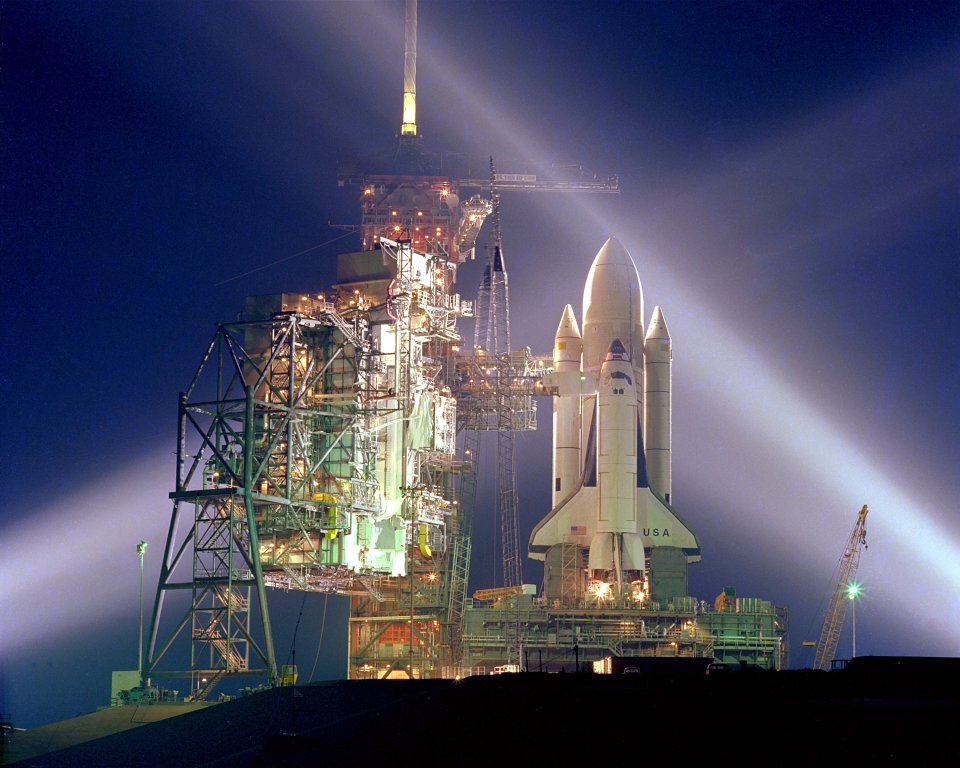
The End of the Space Age?

A sobering and provocative article was released in The Economist on June 30th: The End of the Space Age. In this piece it was argued quite pessimistically that 'it is likely the Space Age is over' where the furthest humans will reach into space will be the technosphere- the swarm of satellites that envelop the Earth. With the final shuttle launch approaching it appears this will be the case. Of course there will be robotic forays to planets within the solar system but

'Every planet has now been visited, and every planet with a solid surface bar Mercury has been landed on. Asteroids, moons and comets have all been added to the stamp album. Unless life turns up on Mars, or somewhere even more unexpected, public interest in the whole thing is likely to wane. And it is the public that pays for it all.'

Is it true that only human space exploration gains public support? And what is the point in human space travel anyway?

Unlike others if I was asked to justify human space travel I wouldn't quickly turn to scientific spin-offs (something Prof. Dawkins claims is the 'non-stick frying pan approach') or praise engineering ingenuity. I think human spaceflight represents something more implacable, intangible and wondrous. Nobody could have predicted the impact of Apollo 8's lunar orbit. The iconic 'Earth Rise' image, photographed on Christmas Eve, has been seen by some to have spawned the environmental movement. Viewing the Earth as a blue jewel in the void of space the planet seemed vulnerable, its silent poetry presenting human follies as pointless, its beauty worth saving.

It's true that space has gradually lost support since the last Apollo flight of 1972. Even during the Apollo missions interest waned. Ask anyone who the first men to walk on the moon were and you would, more than likely, get the right answer. But who would know that Eugene Cernan was the last to walk on the moon? Bizarrely, after the giant leap of 1969 continuing to walk on the moon seemed old news. The inbuilt, impatient explorer in everyone wanted to see what was over the next hill.

With the first Shuttle flight of 1981 came a reusable taxi into Earth orbit. In truth amongst its major achievements in assisting the assemblage of the ISS, taking satellites into orbit, taking the Hubble Space Telescope (HST) into orbit and carrying out a Hubble reservicing mission, none had the grandeur or drama of walking on a new world. But even though a lot of the shuttle missions went largely unnoticed by the general populus it kept the wonder alive from the Apollo era, whether directly or indirectly: humans floating above the great blue Earth in ambitious space walks and the myriad images captured by the HST, opening up the cosmos like never before. Yes, public interest dimmed with the Space Shuttle but at least the candle of exploration was still burning.

So it is with sadness that I will watch the final Shuttle flight on 8th July. Difficult economic times may have led to the Obama administration cancelling the shuttle program and yes the batton has passed to ESA and Russia's space transportation. Then private companies will eventually take over in the intervening time NASA decides what to do with itself. But for me the candle of wonder and exploration will burn with a dimmer light. All we can hope for is that the flame will burn bright in the future.

Friday, 17 September 2010

Desperation


Desperation is a mammoth novel written by Stephen King in 1997. Set in and around the Highway 50 in the middle of the desert, near Ely in the USA, the novel centres around the Carver family, Johnny Marinville (National Award Winning author) and Peter and Mary Jackson. All find themselves bizarrely confronted by a towering cop, Collie Entragian, and taken back to the arid, delapidated mining town, Desperation. It rapidly becomes clear that it is not simply a case of a quick warning from the police; Entragian has his own dark agenda. Or is it his own? The star of the novel is David Carver, a sagacious, clear-thinking, recently converted Christian, who is seemingly directed by God. Will Entragian's victims follow David, in this epic battle of Good Vs. Evil? It seems the Evil once burried beneath Desperation has been unlocked. Faith is the only hope, in David and God.

King's characterisation in Desperation is sublime as in many of his other novels. We really get deep into the minds of the characters, undestanding their motives, quirks and histories. This is especially the case for David Carver where his past experience and conversion to Christianity is an overarching theme of the novel. What is clear thoughout is the sense of claustrophobia, possibly enhanced by the reader entering the character's minds. King seems to have a grasp of human thought under strain as he doesn't focus on the solemn but shows the banal or perverse side to human thought even when pushed to such terrifying extremities. What makes this novel such a page-turner is King's use of perspective and dramatic irony; King shifts perspective at tense moments and witholds his return to the altered perpsective. This works as to deepen our sense of dread and impending doom.

But what stood out most for me was King's detailed study of faith. Indeed, Desperation is inherently about God. However, King isn't in the Dawkins camp: faith is painted in a positive light. Perhaps King's introduction of charcters such as the hedonistic Merinville, transforming within the confines of the novel teaches us that when the human condition is pushed to the farthest reaches of extremity only faith will provide the guiding hand. Otherwise failure is inevitable. Desperation is gripping, terrifying, intelligent. It's a shame King isn't writing such good material nowadays...

Monday, 6 September 2010

The Wrestler

Well I've just watched The Wrestler directed by Darren Aronofsky and thought I would give it an impulsive review.

Randy 'The Ram' Robinson was a well-loved wrestler of the 1980s and 20 years on is still wrestling in gyms and theatres around the US. Having lost contact with his daughter and holding no real relationships, he thrives from the thrill and drama of the live show. However, Randy is forced to face the reality of what lies outside the ring when he has a heart attack and his identity begins to slip away. Trying to reestabilish what he once had, Randy tries to reconnect with his daughter and begins a romance with an aging stripper. But the live crowd beckons and what lies outside the ring does not compare with what lies within.

Micky Rourke is spellbinding as Randy and the film is executed extremely well. Aronofsky is known to push his actors to extreme limits and here it definitely pays off. Also there was no fixed storyboard so actors were allowed to ad lib giving the film a raw, edgy, documentary feel. The wrestling was actually filmed at weekends interspersed in real live performances with a live crowd, providing an unpolished immersive aesthetic. Retrospectively, the $5 million dollar budget is perhaps a necessary requisite to create such passionate realism. Overall a brilliant film and Aronofsky's message is one of dedication; stick to your guns and don't let anything stand in your way.

Friday, 7 August 2009

Stalker

Andrei Tarkovsky's magnum opus, Stalker, is the Russian director's second foray into science fiction after Solaris. It seems a simple film. A Stalker guides the Professor and the Writer to the Zone, a place where your innermost desires come true. However, the film is far from simple. Some critics have seen the film as prescient, the barren wasteland of the Zone suggestive of the surroundings of Chenobyl, whilst others see the film as having poltical parallels with the history of East and West Germany. Tarkovsky himself even said the zone might not exist. Perhaps our endless searching for meaning is futile, an apophenic search leading us astray. Instead, for me, Tarkovsky is dissecting cinema itself. The use of sub-monochromatic and lucid colour, the apparently normal surroundings that have 'mystical qualities', long, musing shots and ending that leaves the audience with jaw ajar trying to piece things together, all lure us into making something meaningful of Stalker. Instead maybe we should search for the Zone within ourselves where we can revel and take great enjoyment in cinema for just being cinema. This is what cinema was made for.

Monday, 3 August 2009

Mesmerising Media


During the past week or so I've watched some fascinating cinema: Quentin Tarantino's Reservoir Dogs, Ingmar Bergman's Through a Glass Darkly, Jean-Luc Godard's Vivre sa Vie and James Marsh's Man on Wire.


Tuesday, 28 July 2009

Londinium Episode 3/3

Sunday, the day of the Sabbath, or otherwise a day to explore dissident, inconoclastic, shocking art. Rising later than usual, we walked bleary eyed into the kitchen, tasty bacon sandwhiches were prepared by Jesse, sustaining us for another busy day and trip back to Dronfield. Pulling our Ouyster cards swarvely from breast-pocket (me and Joe had the hang of it now), we jumped on the red bus to St. Paul's Cathedral. The day was dark but the rain was holding out; the tranquil interior of St.Paul's made us glow. We couldn't see the entirety of the building with it being a Sunday but the part we saw was impressive; many candels decorated the interior making me feel welcome, warm. After wandering around St. Paul's we made our way to the Millenium Bridge to walk across the turbulent Thames to the Tate Modern Gallery.

Art, a bizarre world. As Oscar Wilde noted, 'all art is quite useless' but it is the uselessness of art that makes it so useful. For what other medium can challenge, shock, stir, break boundaries, expose, as much as art. Much different to literature, you experience a work exactly as the artist intended; it is not diluted or transfigured by the imagination as words are. You see what you get. In some ways you could say art and literature are polar opposites. Art is 100% the artist's vision; no imagination is involved only when it comes to interpretation. On the other hand in literature words are flexible; the imagination shapes the words. I was looking forward to the Poetry and Surrealism section, being a big fan of Chirico, Magritte and Dalí. Somehow I just find what the Surrealists tried to do incredibly interesting. Influenced by breakthroughs in psychology, particularly the works of Freud, the surrealists make us look at the world through the prism of our subconscious. Whether it be the melting clocks of Dalí, the beautiful nudes stalking stange landscapes of Delvaux or self-referential paintings of Magritte, we traverse the backwaters of our mind, always finding small nooks and crannies we thought never existed. Highlights in the surrealism section were Magritte's The Sleeper and Nash's Landscape from a Dream. In this section we saw a small film by Maya Deren called Meshes of an Afternoon, Deren's answer to Hollywood film convention where the rule book is ripped up and the world of dream is allowed to run uninhibited. It was very enjoyable. The music was incredibly eerie and the cloaked ghost-like figure with a mirror face was shocking.

Some art was just too bizarre: women cutting letter holes in the vaginal area of their trousers 'to make a statement', a naked women covering herself in blood and rolling around in feathers, artists performing disturbing rituals or crucifixions with animals... Are these artists just out to shock? Or does their work mean something more profound? It may take me a while to see where the genius lies but I'll try. I much preferred the huge palm tree with naturalistic wallpaper surrounding it, garangutan mops and 30 pieces of silver sculptures. The classical model of Venus was funny next to a pile of dirty washing, illustrating how much society has moved on. Another highlight for me was the Russian propoganda section. You can really see how the harsh, cutting reds, blacks and whites convinced the Russian populace Russia was utopia- of course the total opposite from what it was. Other sections we explored were Manga and Andy Warhol.

A big blue bag. Unaccompanied, alone. There's a bomb in it. Oh, no it's Joe's bag. Quick, go and tell him before he causes a bomb scare. Just another day in the life of Mr Polshaw...

We left the gallery, brains tingling with the varied art we saw. On to the red bus, we rode to Kings Cross. Me and Joe gave Jesse a hearty handshake, thanking him for a busy, rewarding, adventurous weekend. Thanks a lot Jesse, London was lovely.